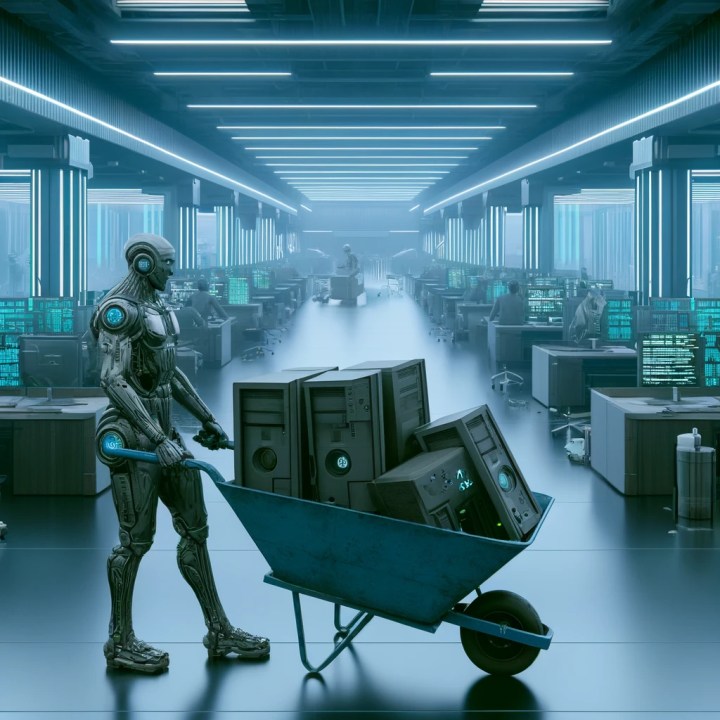
“Automation does not need to be our enemy. I think machines can make life easier for men, if men do not let the machines dominate them.” — John F Kennedy
The Evolution of Developer Automation
Software engineers have long embraced the philosophy of automating repetitive tasks. The industry has progressively introduced tools that reduce manual work:
- Early era: Manual debugging through console logging and frequent server restarts
- IDE advancement: Integrated Development Environments eliminated many routine tasks
- Modern infrastructure: Docker, Kubernetes, and Terraform automate deployment processes
- Framework libraries: Open-source solutions handle common functions like JSON parsing and database management
These innovations increased developer productivity and lowered barriers to entry, yet professional demand remained stable with salaries exceeding six figures and 150,000+ open positions.

AI Represents a Fundamental Shift
The critical distinction lies in AI agents’ capabilities versus traditional tools. Unlike IDEs or frameworks limited to boilerplate code, AI can handle complete application design based on natural language requests—building calendar managers or clinical trial tracking systems from specifications.
Previous automation tools maintained scarcity through skill requirements. AI eliminates this barrier, enabling anyone to accomplish what historically required programming expertise.

Supply and Demand Economics
The demand for developers exists partly because most coding involves similar business applications rather than unique technical challenges. Low-code and framework solutions prove viable precisely because development work is often standardized.
AI removes both the skill barrier and the need for specialized flexibility. When everyday language can produce functional applications, the professional lock on development work dissolves. Manufacturing faced similar disruption through 3D printing; software will experience faster impacts due to scalability.
The Predicted Outcome
Rather than gradual decline, the field will likely bifurcate:
- Elite tier: Highly skilled engineers at top-tier organizations commanding premium compensation
- Commoditized sector: Most businesses rely on AI for development needs
- Accelerating capability: Today represents the weakest AI performance; improvement occurs rapidly
Software engineers may ultimately achieve their long-stated goal—automating themselves out of traditional employment—while democratizing development across society.